ServicesRoof Repair
Roof Repair in Nicoma Park, OK
Missing shingles or a drip in the hallway can often be fixed without tearing off the whole roof. We trace the water back to where it starts, repair it with material that fits what is already up there, and give you a straight answer about the rest of the roof.
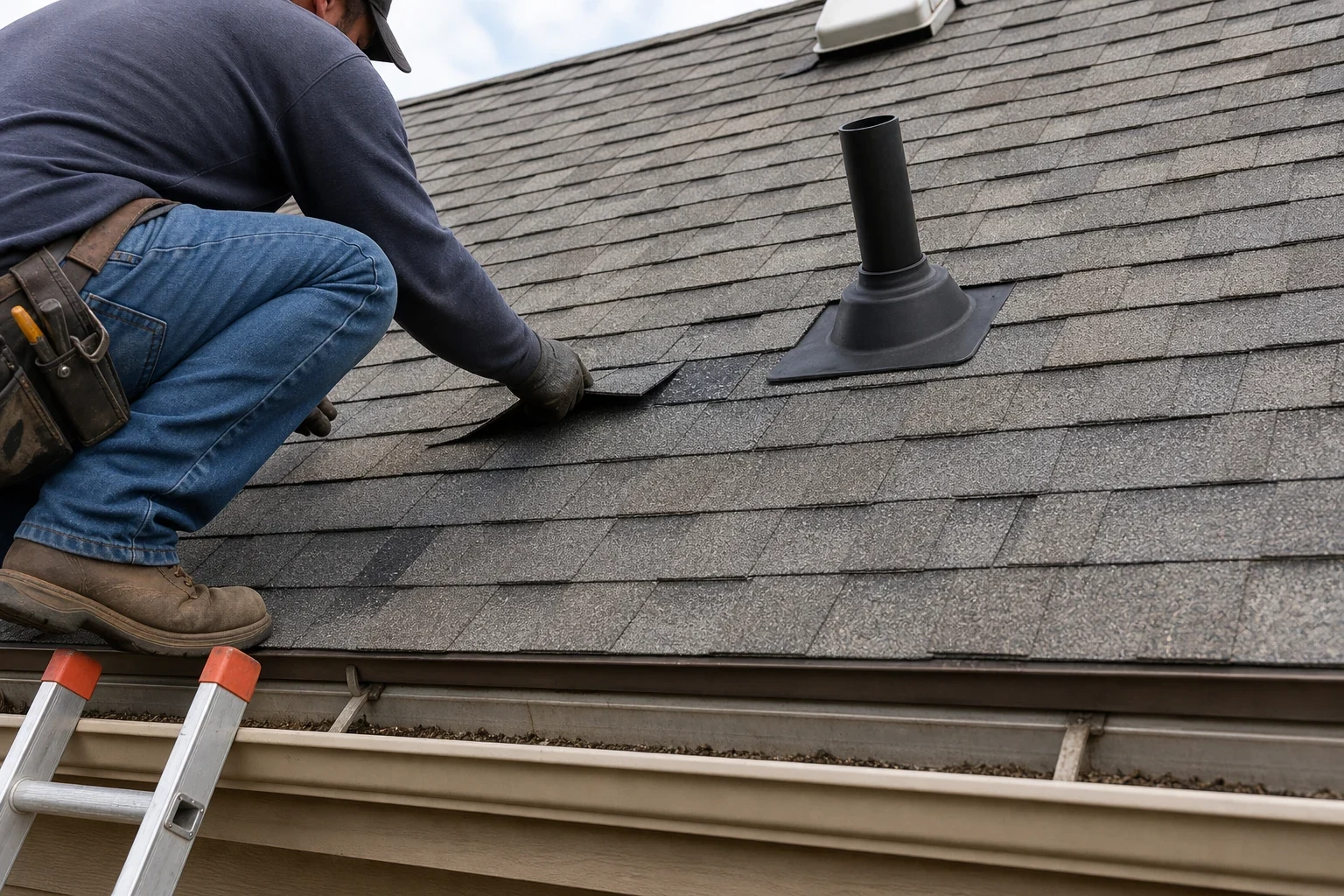
Fixing the problem, not just the spot
Most roof repairs come down to a small number of parts: shingles, flashing, pipe boots, vents and the decking under them. Water rarely shows up inside right below where it gets in. It runs along the deck or a rafter first. So we trace it back before we touch anything.
The material on your roof decides how we fix it. Architectural shingles, older 3-tab shingles, metal panels and low-slope roll roofing all fail in different ways and take different repairs. We match what you have so the patch holds up and does not stand out from the street.
If the roof is near the end of its life, we will say so. Sometimes a repair buys you a few good years. Sometimes it just puts off roof replacement and costs you twice. You get our honest read either way.
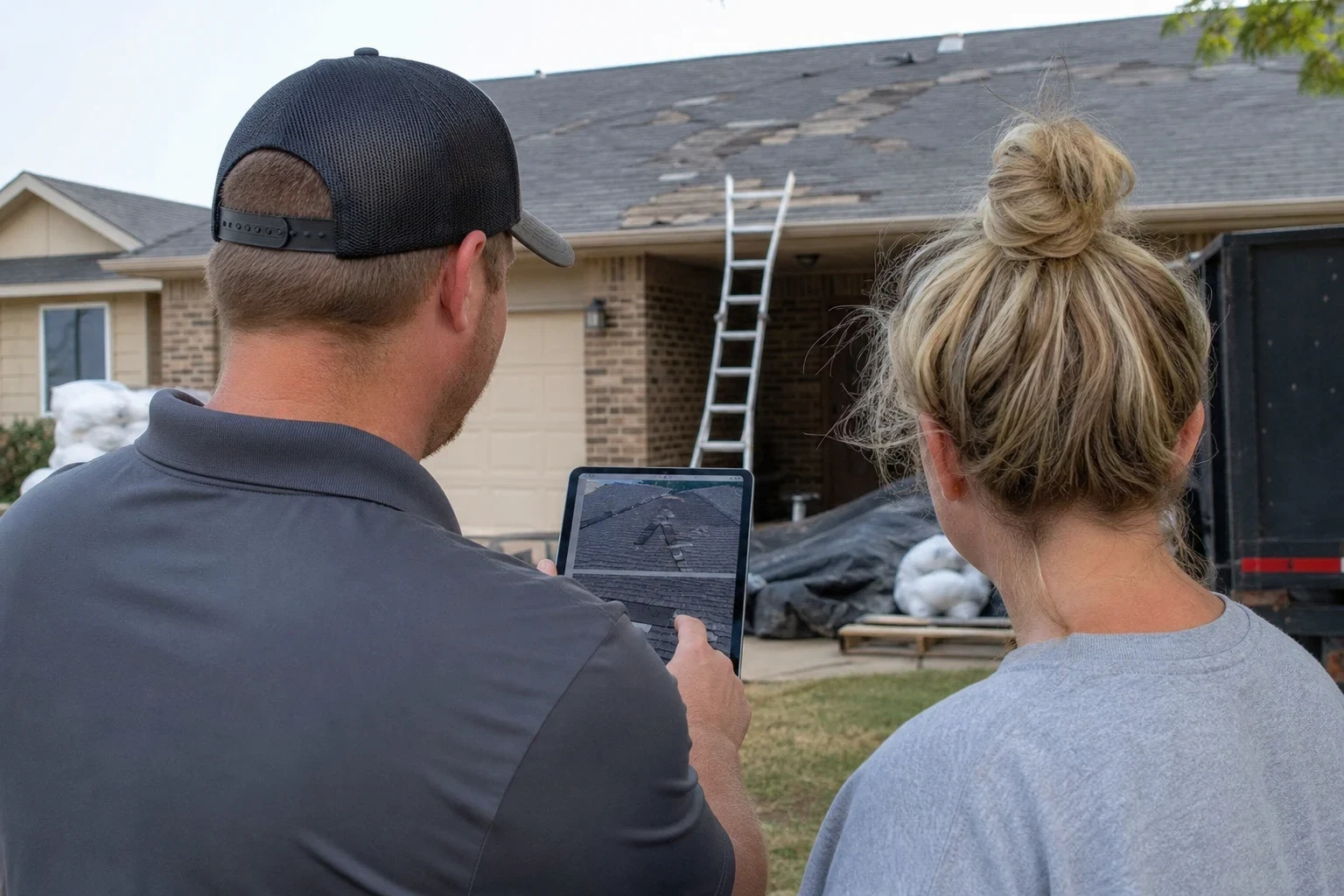
What our roof repair covers
- 01
Finding the real leak
We look in the attic and on the roof at the same visit. Water stains, damp insulation and pinholes of light through the boards show us the true entry point.
- 02
Shingle swaps that blend in
Torn, creased or missing shingles come off and new ones go down and get sealed. If your color or style is no longer made, you see samples and choose the nearest one before work begins.
- 03
Flashing and pipe boots
Wall step flashing, chimney flashing and rubber pipe boots cause a lot of leaks. Sun cracks rubber boots over time, so we replace them with a sturdier style where your roof allows.
- 04
Metal and low-slope sections
For metal roofs we change worn screws and washers, reseal panel overlaps and repair trim. Over porches and additions with a flat or low slope, we patch or replace the membrane with the same type.
- 05
Soft decking
When the boards under a leak are spongy or coming apart, we cut them out and put in new wood. New shingles over rotten decking would only hide the trouble.
Questions about Roof Repair?
Call(405) 451-5185When your roof is asking for a repair
Stains on ceilings or walls
Brown, ring-shaped marks on drywall show water has been coming in, usually longer than you think. If the attic is safe to reach, take a look up there as well.
Shingles in the yard
Shingles or torn pieces on the lawn after high wind mean there are bare patches on the roof. Water can get straight to the felt and decking there.
Grit at the downspouts
Lots of sandy granules washing out means the shingles are thinning. A new roof sheds a little, but heavy amounts from an older roof deserve a check.
Curling or flapping shingles
When edges lift, the seal strip has let go. Wind catches them and the next storm may rip them away.
Damp, musty attic
An odor, or insulation that is matted and wet, signals a slow leak. These quiet leaks cause the most harm since they go unnoticed for months.
How a repair job runs
- 1
Tell us what you see
Let us know where the water or damage shows up and roughly how old the roof is. We pick a time to come out.
- 2
Look and photograph
We climb the roof and check the attic when there is access. You get pictures of the problem and a plain account of what caused it.
- 3
Written estimate
Each part of the work is its own line, along with the material we would use. If a repair does not make sense for your roof, we say so.
- 4
Repair and cleanup
A typical repair wraps up the same day we start. We cover flower beds and the driveway, haul off old shingles, run a magnet over the yard for nails, and walk you through the finished repair.
What sets the price of a repair
We price each repair once we have seen the roof up close. Your written estimate breaks the job into separate lines, so every charge is clear. These are the things that push the total up or down.
- What your roof is made of
- Asphalt shingles go back together quickly. Metal panels, specialty shingles and low-slope membranes need their own parts and take more hours.
- How far the damage goes
- Swapping one split pipe boot is quick work. Wind damage on several slopes, or bad flashing down the length of a wall, means more labor and more material.
- Hidden damage below
- Once old shingles are off, we sometimes find soft decking or soaked underlayment. That adds to the job, and we send you photos before we do any of it.
- Steepness and getting to it
- A steep pitch calls for more safety gear and setup. A two-story wall, a narrow side yard or large trees close to the house can slow the work too.
Roof repair questions
Can you match my old shingles?
We can usually get close, though not always exact. Sun fades shingles over the years, so even the identical product looks a shade off when it first goes on. If your line has been discontinued, we bring the nearest samples and you pick one before we start.
Should I repair or replace my roof?
Two things decide it: how old the roof is and how much of it is giving out. Damage in one area on an otherwise healthy roof is a good case for a repair. If the shingles are brittle and shedding grit everywhere, we will walk you through why roof replacement may save money over time. The choice is yours.
Is my repair covered by insurance?
Normal wear and age generally are not. Hail and wind damage may be. When we spot storm damage, we photograph it and refer you to our storm damage repair service, but the adjuster is the one who decides coverage.
How long does a repair take?
A repair in one spot is typically finished within a few hours. Jobs that include replacing decking can stretch longer. We plan the work for dry days so your roof never sits open.
Do you repair metal roofs?
We do. The usual work is changing out worn screws, resealing where panels overlap, and fixing ridge caps and trim. We use fasteners and sealant built for metal, so the repair flexes with the panels as they heat up and cool down.
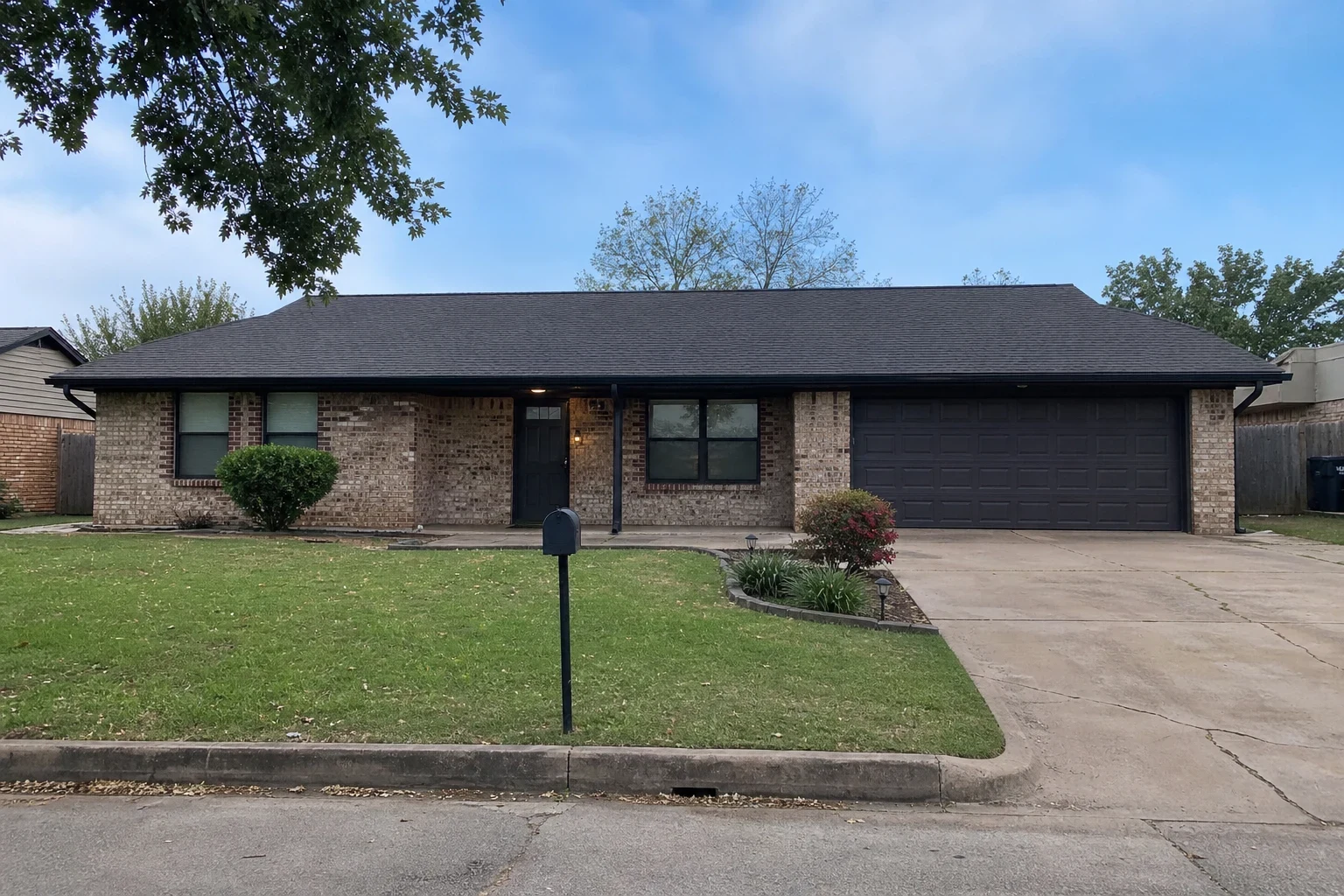
Got a leak or missing shingles?
Tell us what you see and how old the roof is. We will come out, find the cause and give you a written estimate with the material spelled out.