ServicesCommercial Roof Replacement
Commercial Roof Replacement in Nicoma Park
When a flat or low-slope roof is past patching, we replace it with the system that fits your building. We walk you through TPO, EPDM, modified bitumen and metal, explain what each costs to own, and keep your business running while we work.
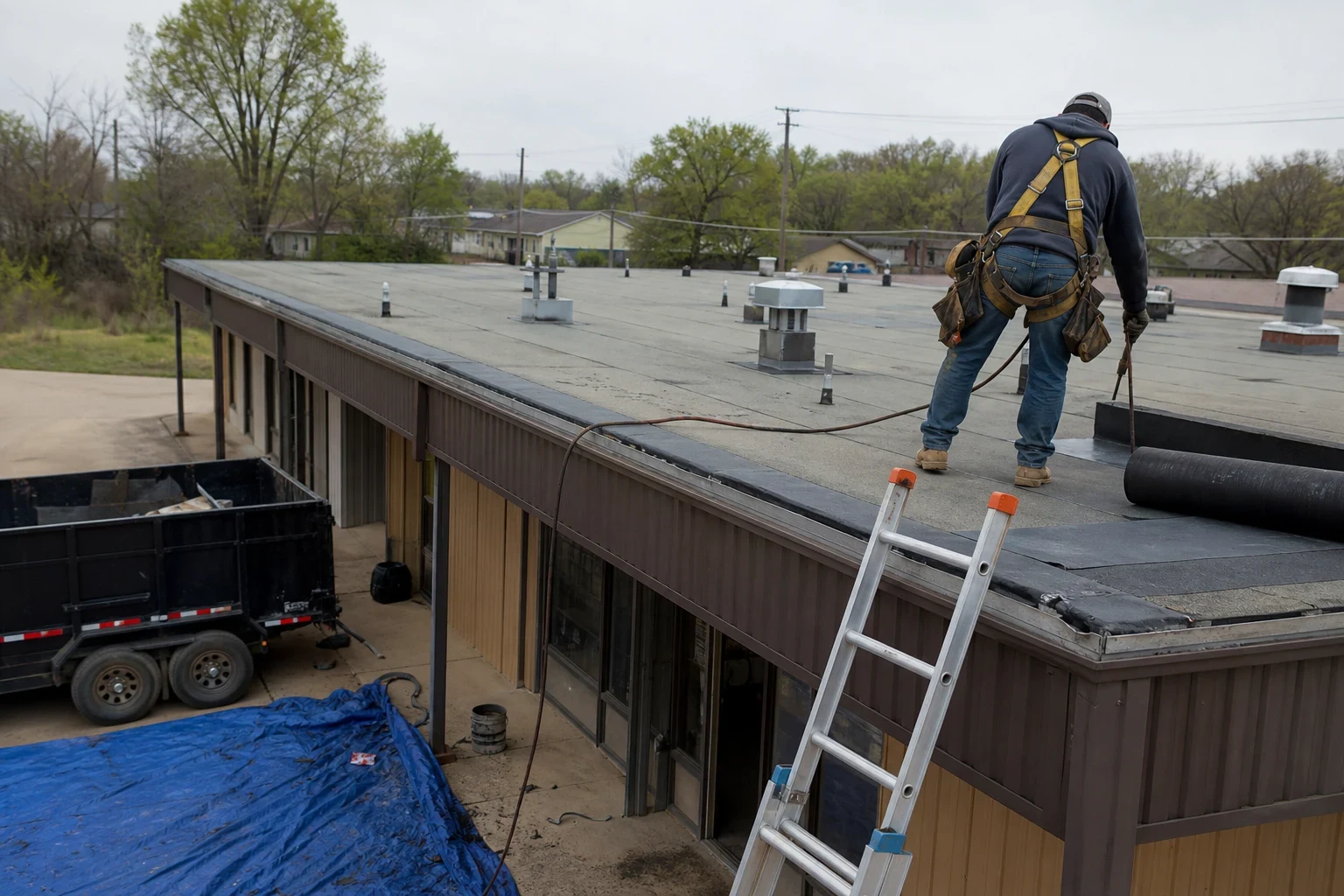
When replacement makes more sense than another repair
Most commercial roofs fail slowly. Seams open, the insulation under the membrane soaks up water, and the same leak comes back a few feet over from where it was fixed last time. Once wet insulation spreads across a large part of the deck, patching just chases water around.
A new roof starts with the right material. A single-ply membrane like TPO or EPDM covers big, flat areas with few seams. Modified bitumen takes foot traffic well around rooftop units. Standing seam metal suits low-slope roofs with some pitch and lasts a long time. We tell you what each one does well and where it falls short, then you pick.
If the roof still has good bones, our Commercial Roof Repair page covers the smaller fixes. We will say so plainly if that is the better call.
What a commercial reroof includes
Core cuts and a moisture check
We cut small test samples to see how many layers are up there and whether the insulation is wet. That tells us if a recover is allowed or if it has to be a full tear-off.
Tear-off and deck repair
We remove the old roof down to the deck and replace rusted metal decking or rotted wood before anything new goes on.
Insulation and tapered slope
We install new polyiso board. Where water sits in low spots, tapered insulation builds in slope so it drains to the scuppers or drains instead of ponding.
Membrane or metal system
TPO and PVC seams are heat-welded. EPDM is glued and taped. Modified bitumen goes down in layers. Metal panels lock together at raised seams. Each gets installed to the maker's specs.
Flashing, edges and penetrations
Curbs, pipe boots, parapet walls and edge metal are where most commercial leaks start. We flash every one with new pieces, never reused ones.
Drains, scuppers and cleanup
We clear and reset drains, tie in the gutters and downspouts, and pick up debris and fasteners from the lot each day.
Signs your commercial roof needs replacing
Leaks that keep moving
You fix one spot and a new drip shows up somewhere else. That usually means water is traveling under the membrane through wet insulation.
Ponding that stays for days
Water that sits 48 hours after rain stresses seams and adds weight. It often means the deck has sagged or the slope was never right.
Shrinking or brittle membrane
Older EPDM pulls away from walls and edges. Aged TPO can crack. Once the sheet itself is failing, more patches will not hold.
Blisters and split seams
Bubbles in modified bitumen or built-up roofs trap moisture, and Oklahoma summer heat makes them grow.
Soft spots underfoot
If the roof feels spongy when you walk it, the insulation or deck below is damaged.
How the job runs
- 1
Walk the roof together
We get on the roof, take core samples and photos, and go over what we found with you. Then we lay out the options side by side.
- 2
Written estimate and permit
You get a line-item estimate that shows the system, insulation, flashing and any deck work. We pull the permit before we start.
- 3
Plan around your business
We set staging, dumpster spots and work hours so customers can still park and get in the door. Noisy tear-off can be scheduled for slower hours when that helps.
- 4
Section by section install
We tear off only what we can dry in that day. Each section is sealed before we leave, so an afternoon storm does not get inside.
- 5
Final walk and inspection
We walk the finished roof with you, check every drain and seam, and wrap up the inspection.
What moves the price of a commercial roof
Two buildings with the same square footage can price very differently. The material you choose matters, but so does what we find once the old roof comes off. We explain each line on the estimate so nothing shows up later as a surprise.
- Material choice
- EPDM and TPO usually cost less up front. PVC handles grease from restaurant exhausts better. Metal costs more to install but can outlast a membrane by many years.
- Tear-off or recover
- If there is only one roof layer and the insulation is dry, a recover can skip a full tear-off. Wet insulation or two existing layers means it all comes off.
- Deck and insulation condition
- Rusted decking, rotted wood and soaked insulation all have to be replaced. Tapered insulation for drainage adds board and labor.
- Rooftop equipment and access
- HVAC units, vents, skylights and parapet walls each need their own flashing. Tight access or a tall building can mean extra lift time.
Commercial roof replacement questions
Something not covered here? (405) 451-5185
Do we have to close while the roof is replaced?
Most businesses stay open. We work in sections, keep entrances clear, and talk with you about which hours work best for loud tear-off. Inside, you may hear foot traffic and some noise, but the building stays dried in each night.
Which is better for a flat roof, TPO or EPDM?
Neither wins every time. TPO is white, reflects summer heat and has welded seams. EPDM is black rubber that stays flexible in cold weather and has a long track record. We look at your building, your energy costs and what is on the roof before we recommend one.
Can you put a new roof over the old one?
Sometimes. Code limits how many layers a roof can have, and you never want to cover wet insulation. Our core cuts tell us which way to go, and we show you the samples.
How long does a commercial reroof take?
It depends on size, material and weather. A small shop or office roof can take a few days, while larger buildings take longer. We give you a schedule with the estimate and keep you posted if rain pushes a day.
Do you work outside Nicoma Park?
Yes. We replace commercial roofs in Midwest City, Choctaw, Del City, Harrah and the other towns on our Service Areas page.
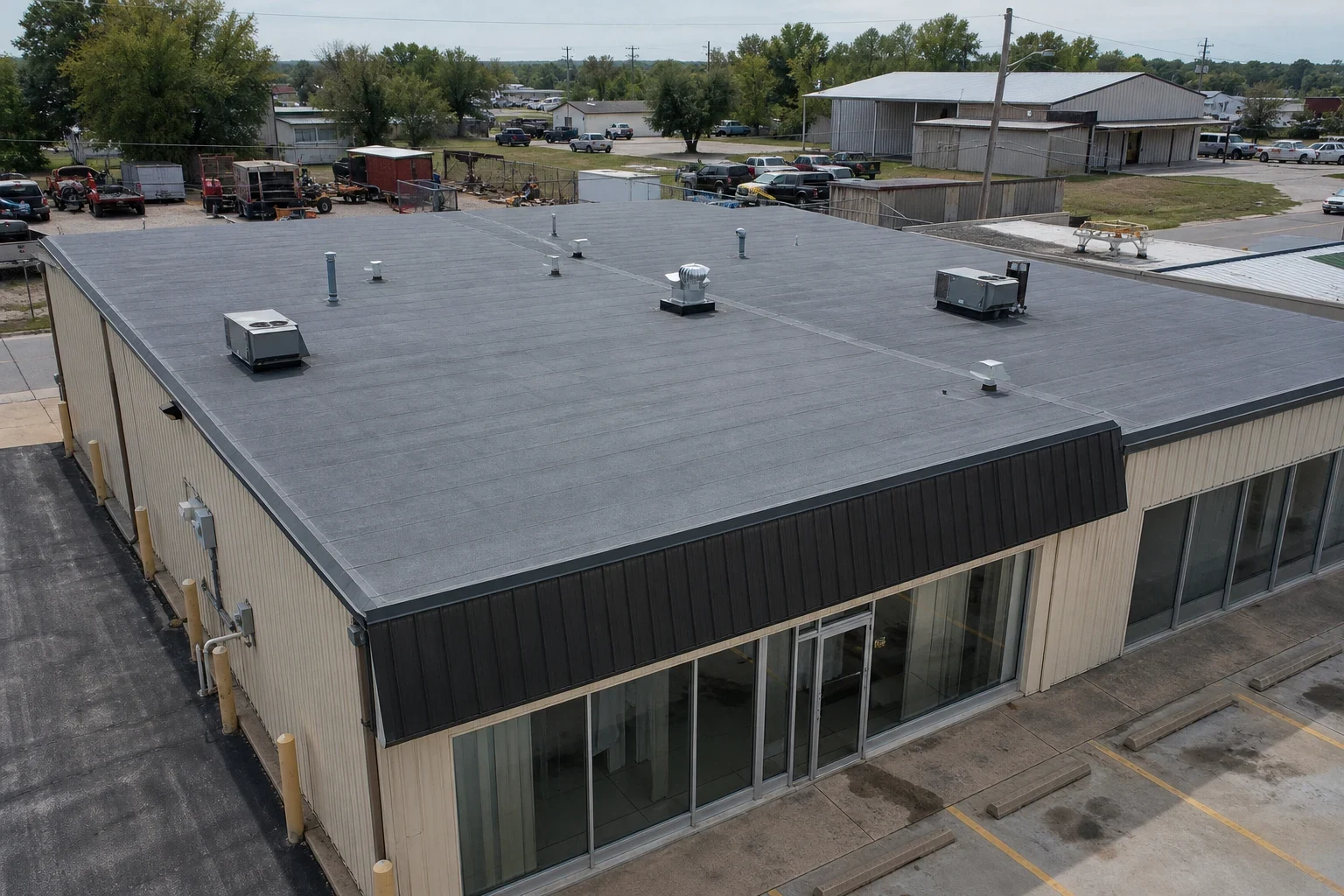
Get a straight answer on your commercial roof
We will look at what is up there, show you what we found and compare the roof systems in plain terms. Then you decide.