ServicesRoof Inspections
Roof Inspections in Nicoma Park
We walk every slope of your roof with a camera in hand. Afterward we go through each picture with you in everyday words: which problems need a fix soon, which can sit a while, and how many good years your shingles or metal panels likely have left.
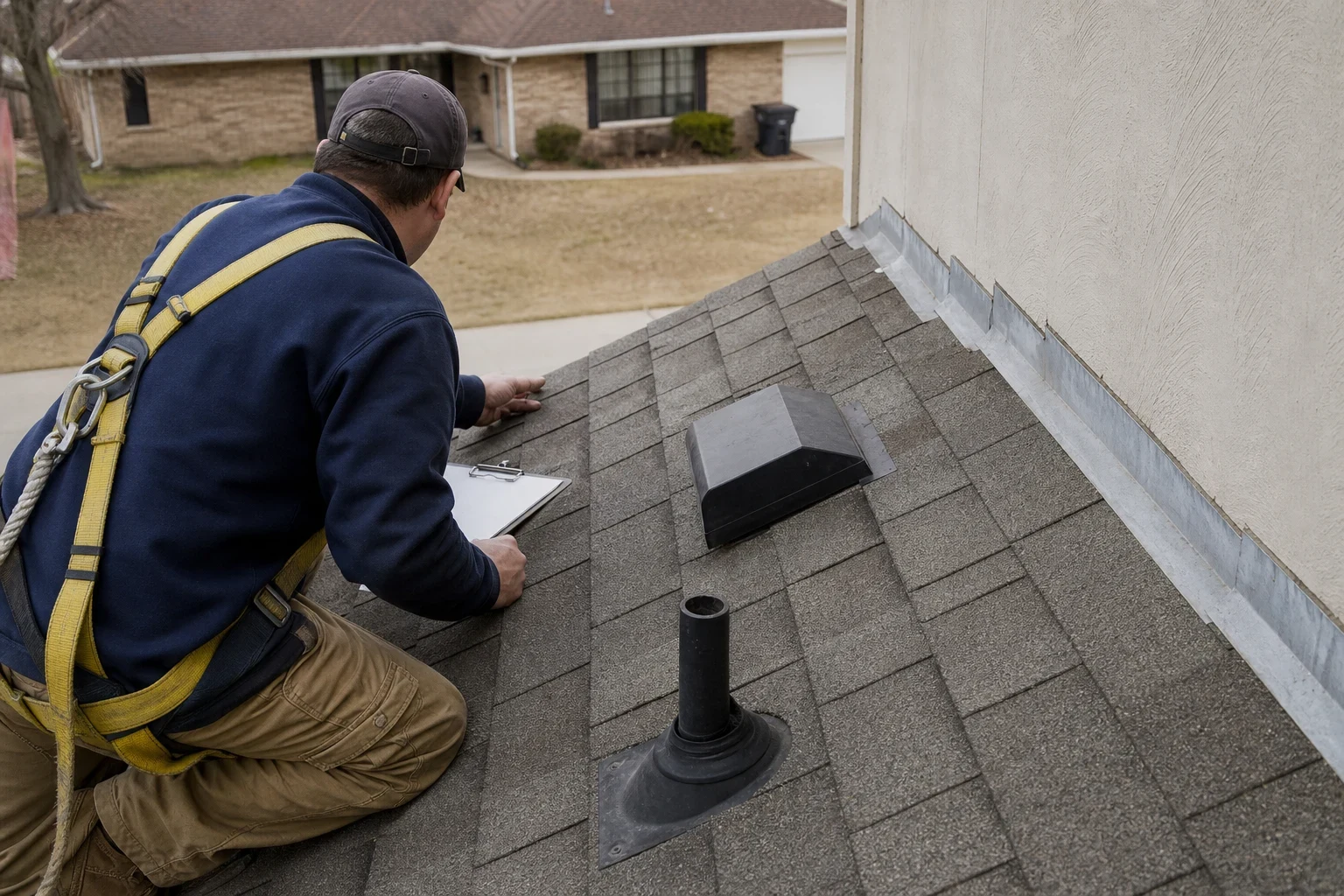
Why Homeowners Get the Roof Checked
An inspection takes in every part of your home's roof that keeps the weather out. That means the shingles or panels, flashing along chimneys and walls, pipe boots and vents, gutters and edges, plus the attic underneath if there is a way up.
Shingles, metal and wood shake each wear out in their own way, so the first thing we note is what your roof is made of. Asphalt loses its granules and begins to curl. Metal loosens its screws as it expands and contracts. Aging shake cracks and cups. Knowing the material tells us where problems tend to hide and how serious a worn spot really is.
Sensible times to have us out: ahead of buying or selling a house, after a hard hail or wind season, once the roof is roughly 15 years old, or any time a stain appears on a ceiling and you need to know where the water is coming from.
What We Look At Up There
- Shingles or metal panels
- On asphalt we look for bruises, cracks, lifted tabs, curling and bald spots where the granules have worn off. On metal we check seams, fasteners and any rust creeping in from cut edges. Anything worth noting gets a photo.
- Flashing and anything that pokes through
- Most leaks begin where the roof has been cut open. We check chimney and wall flashing, pipe boots, vents and skylights for gaps, cracked sealant and rust.
- Soft decking
- As we walk the slopes, we feel for spots that flex underfoot. Give in the roof usually means the plywood under it is wet or rotting, and that changes the size of any repair.
- Attic and airflow
- If your attic has a usable hatch, we climb in and look at the bottom side of the roof deck for stains, specks of daylight and damp wood. Weak ventilation traps summer heat, which cooks shingles from below and cuts years off them.
- Gutters and edges
- Gutters should hug the fascia, slope toward the downspouts and drain freely. We also look at the drip edge and fascia board, since water that pools at the edge rots wood fast.
- A photo report
- You get a short written list of what we found, with the most important items first. If the roof is in good shape, the report says so plainly.
When It Makes Sense to Have Us Look
Grit piling up in the gutters
Fresh shingles shed some loose granules in their first year. When an older roof keeps dumping them, the protective top coat is wearing away.
Water marks on a ceiling
A brown ring or bubbling paint means water found a way in. Water runs along rafters before it drips, so the real opening is often well away from the stain.
A hard hail or wind storm
Spring storms in central Oklahoma can bruise shingles or dent metal in ways nobody sees from the driveway. Checking afterward tells you whether there is damage worth a claim.
Shingles curling, cracking or gone
Cupped or cracked shingles have dried out and lost their flex. Missing ones leave the underlayment exposed to sun and rain.
A home sale coming up
Buyers and sellers both do better knowing the roof's real shape and remaining life before closing.
What Moves the Price of an Inspection
Most inspections are straightforward, and we talk through the price on the phone before anyone drives out. A few things can change it, and we point those out up front.
Size and steepness
A large or steep roof takes more time to cover safely and can call for extra harness and anchor setup.
What the roof is made of
Asphalt is quick to walk. Metal, tile and old wood shake take slower, more careful footwork so the inspection does not cause damage.
Getting into the attic
A cramped or blocked attic hatch adds time before we can check the deck from below.
Report detail
A home sale or insurance claim may need a fuller written report with more photos and measurements.
How the Visit Goes
- 1
Your call
On the phone we want to know the roof's age, the material on it and anything that caught your eye. Then we agree on a day and time that works for you.
- 2
A walk around the house
Before the ladder goes up, we circle your home and look at roof lines, sags, gutters and fascia. If the attic is accessible, that comes next.
- 3
Up on the roof
We work across every slope and photograph as we go. Where we step matters, especially on older shingles, so we move slowly and take care not to cause new damage.
- 4
Going over the findings
We sit down with you and go through the photos. You hear what needs repair, what can wait, and whether patching or a full replacement is the better move. The choice stays with you.
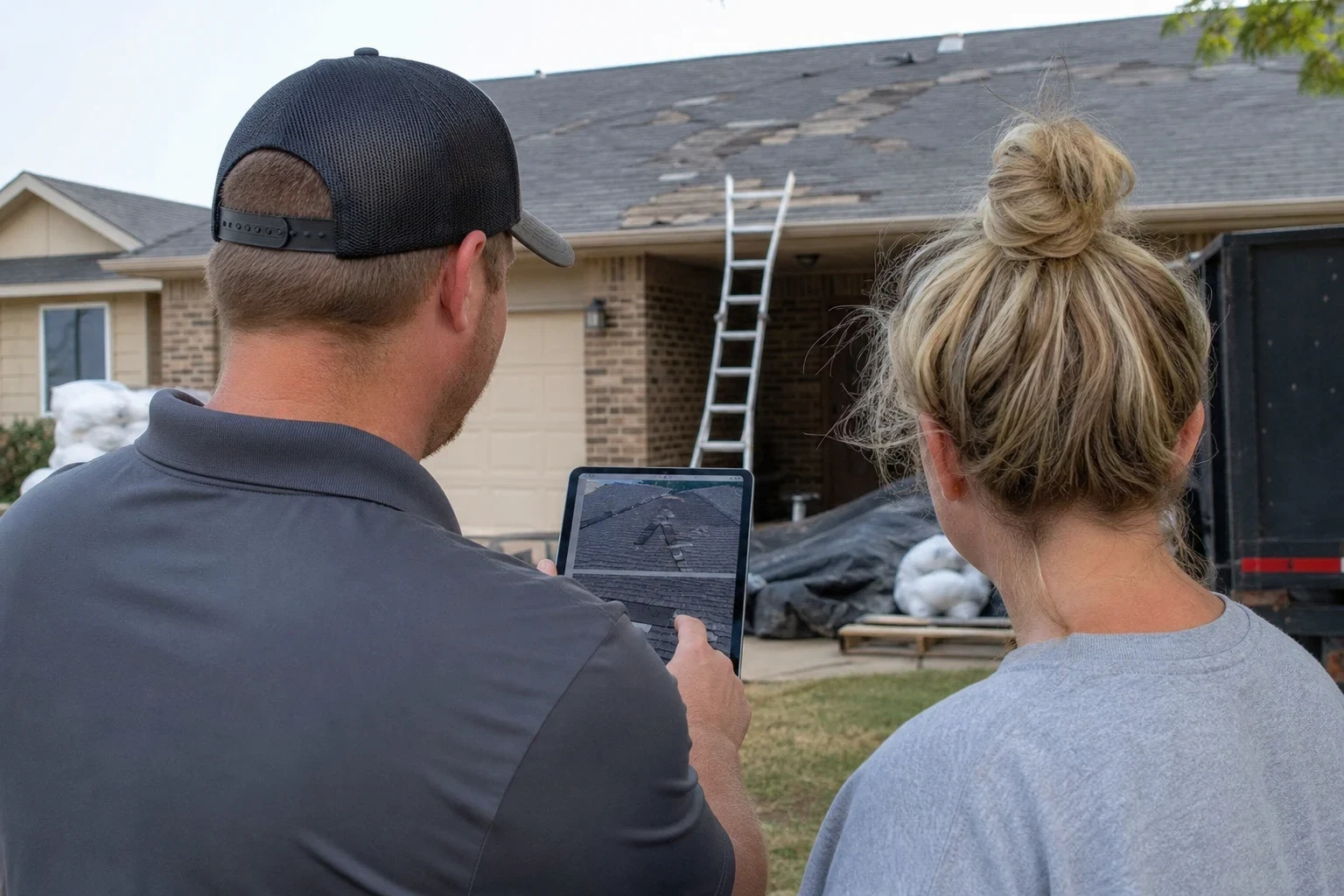
Questions About Roof Inspections
How long does a roof inspection take?
Most single-story homes take around an hour. A steep or large roof, or an attic that is tough to get into, stretches that out. Before we pack up, we go over the findings with you.
Do I need to be home?
It helps, mainly so we can reach the attic. If you are at work, we can handle the outside on our own and then phone you to walk through the photos.
Can you tell how much life my roof has left?
We can give you a fair estimate. It comes down to the roofing material, how well it was installed and how it has held up to sun and storms. Three-tab shingles, architectural shingles and metal all wear at different speeds, and we tell you what we see on yours.
Are you going to push a new roof on me?
No. If a fix will last, we tell you that, and the work falls under our roof repair service. Roof replacement only comes up when wear has spread across most of the roof.
Will an inspection back up an insurance claim?
Often, yes. The pictures and notes we take record what got damaged and exactly where. We do not act as your adjuster, but we will explain what we found and can meet the adjuster on site if you want us there. Our storm damage repair page covers how that usually goes.
Is it worth inspecting a newer roof?
After a big storm, or if something looks wrong, yes. Even a young roof can lose shingles in high wind or get hit by hail. Finding it early keeps a small fix small.
Know What Shape Your Roof Is In
Give us a call with your roof's age and what it is made of, and we will find a day to get up there. You will see the photos and get a clear answer on what it needs.