ServicesCommercial Roof Repair
Commercial Roof Repair in Nicoma Park
We repair flat, low-slope and metal roofs on shops, offices and small commercial buildings. We find where the water is really getting in, patch it with material that matches your roof, and tell you plainly how much life the roof has left.
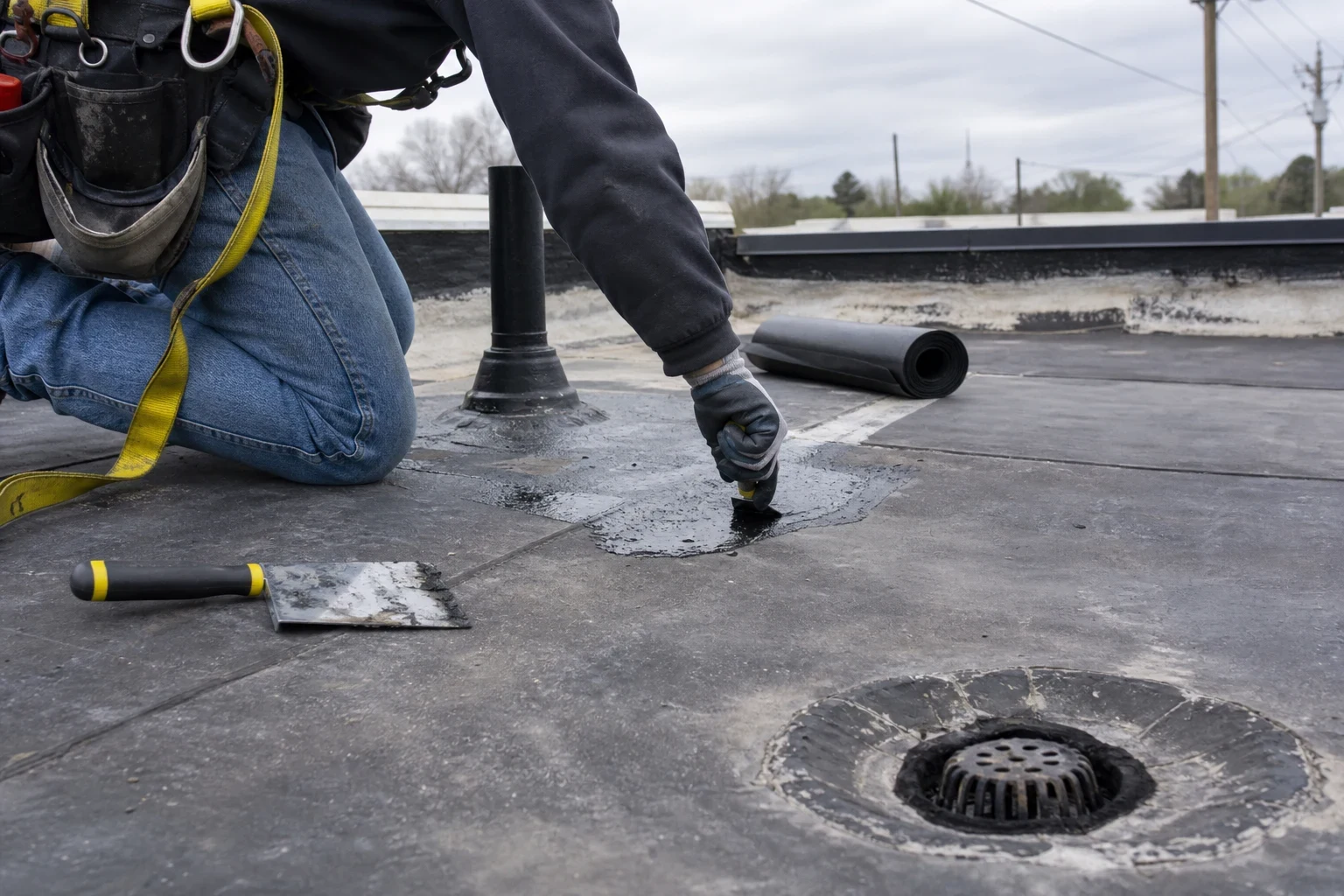
Repairs that match the roof you have
Most commercial roofs around here are one of four types: TPO, EPDM rubber, modified bitumen or metal panels. Each one fails in its own way. TPO seams can let go. EPDM shrinks and pulls away at the edges. Modified bitumen cracks and blisters in the sun. Metal leaks at fasteners and panel laps.
A good repair uses the same material, or one that bonds to it the right way. Put asphalt mastic on a TPO roof and it will not stick for long. We match the fix to the membrane so it holds through the next hail season and the summer after that.
A repair is the right call when the damage is in one area and the rest of the roof is still sound. If it is not, we will say so and walk you through commercial roof replacement instead.
What a commercial repair covers
Finding the real leak
Water on a flat roof can travel a long way under the membrane before it drips inside. We trace it back to the source instead of patching the spot above the stain.
Seam and lap repair
We reweld TPO seams with a hot-air welder, reseal EPDM laps with the proper primer and tape, and torch or cold-apply new plies on modified bitumen.
Flashing and penetrations
Rooftop units, vent stacks, pipe boots and curbs are where most commercial leaks start. We reflash them and replace cracked pitch pans.
Metal roof fasteners and panels
We replace worn screws and dried-out washers, reseal laps, and swap out panels that are bent or rusted through.
Drains, scuppers and edges
Ponding water wears a roof out fast. We clear and repair drains and scuppers, and fix loose edge metal before wind can get under it.
Photos and a written report
You get pictures of what we found and what we fixed, so you have a record for your files or your insurance company.
Signs your building roof needs attention
Stains on ceiling tiles
Brown rings on drop-ceiling tiles mean water has been getting in for a while. Do not just swap the tile.
Standing water after rain
If water is still sitting on the roof two days after a storm, a drain is blocked or the deck has sagged.
Blisters, bubbles or wrinkles
Trapped moisture under modified bitumen or a loose membrane shows up as soft, raised spots. They split open over time.
Seams pulling apart
Open seams on TPO or EPDM let water straight under the membrane. Strong spring wind can peel them further.
Rust streaks on a metal roof
Rust around screws or at panel laps means the sealant is gone and water is getting through.
How a repair job goes
- 1
We get on the roof
We check the membrane, seams, flashing and drains, and look at the deck from inside where we can. We take photos as we go.
- 2
We explain what we found
You hear what failed, why it failed and what it takes to fix it. When a membrane is worn out and patches will only buy a little time, we say so before you spend money on them.
- 3
We schedule around your business
We plan the work so customers and staff can keep coming and going. Torch work and loud cutting can be timed for slower hours.
- 4
We make the repair
We use material that matches your roof and work it into the sound areas around the damage. Then we water-test where it makes sense.
- 5
We clean up and report back
Old membrane, screws and debris come off the roof and the lot. You get before and after photos.
What sets the price of a commercial repair
No two repairs cost the same, because no two roofs fail the same way. The price comes from what we find on the roof, not a set number. We walk you through the cost by phone and in person before any work starts.
- Roof material
- Welding a TPO seam, priming and taping EPDM, and torching modified bitumen all take different tools and supplies. Metal repairs depend on whether panels can be matched.
- Size of the damaged area
- A single failed pipe boot is a small job. Wet insulation spread across a section means cutting out and replacing more.
- What is under the membrane
- Soaked insulation or a rusted or rotted deck has to be replaced before new membrane goes down. We will not know the full extent until we open it up.
- Access and rooftop equipment
- Taller buildings, tight access and HVAC units that must be worked around add time and labor.
Commercial roof repair questions
Something not covered here? (405) 451-5185
Can you patch my roof or does it need replacing?
Most roofs can be repaired if the damage is limited and the membrane is still flexible. If the membrane is brittle, shrinking everywhere or the insulation is wet across large areas, patches will not keep up. We hand you the pictures from your own roof and tell you plainly which route makes more sense for the building, even when the smaller job is the right one.
Do I have to close my business while you work?
Usually not. Most repairs happen up top without anyone needing to leave the building. We sort out timing with you ahead of time for noisy work or anything close to an entrance.
Can you repair a roof another company installed?
Yes. We work on TPO, EPDM, modified bitumen, built-up and metal roofs no matter who put them on. We just need to see what is up there so the repair materials match and bond the way they should.
Will hail damage on my building be covered by insurance?
That depends on your policy and what the adjuster decides. We photograph each damaged spot, note the roof type and its condition, and go over it with you. That gives you a clear record to take to your insurance company. Our storm damage repair page has more on how that usually goes.
How often should a commercial roof be checked?
Twice a year is a good habit, once in spring and once in fall, plus after any big hail or wind storm. Small problems at flashing and drains cost far less to fix when they are caught early. Our roof inspections page covers what we look at.
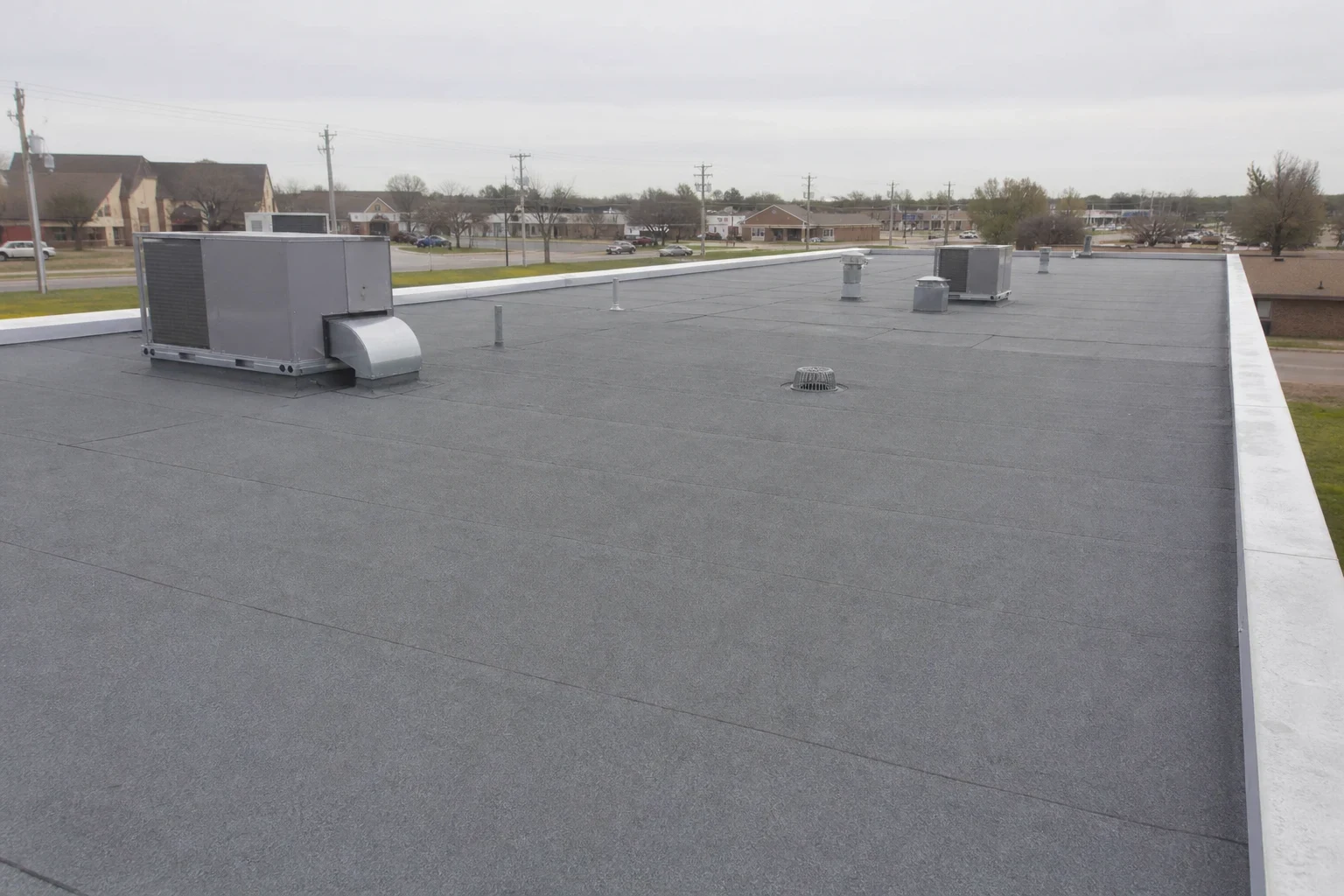
Get the leak fixed before it spreads
Tell us what kind of roof your building has and where you are seeing water. We will set a time to come look and explain what the repair involves.