ServicesGutters
Gutters in Nicoma Park
We hang new gutters and downspouts that carry rainwater clear of your siding, fascia and foundation. Before any work starts, we set aluminum, steel and copper side by side, explain the sizes and tell you what each choice costs over the years, so you pick what fits your home.
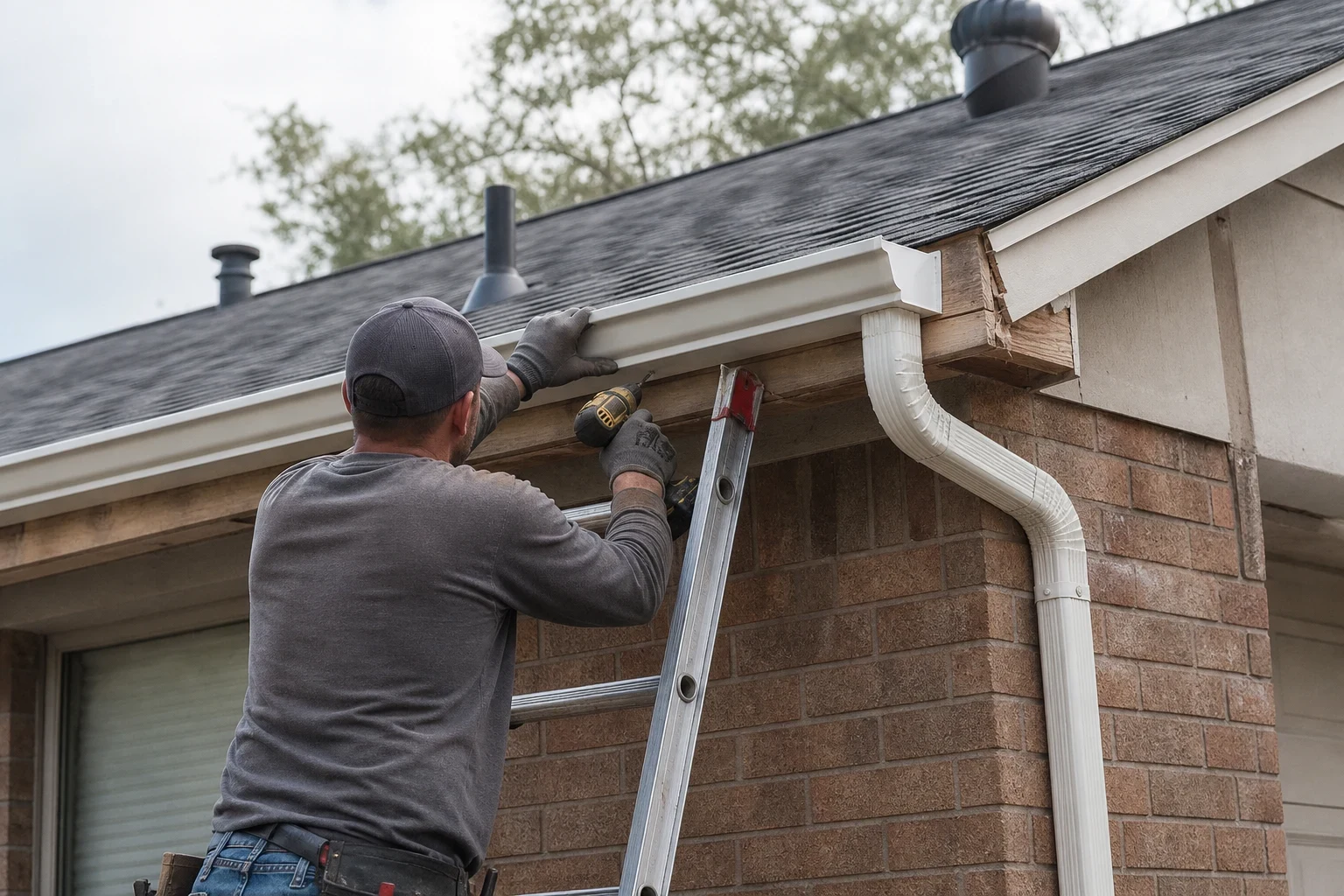
What a good gutter system does for your home
A roof sheds a lot of water in a storm, and all of it ends up at the eaves. Gutters catch that water and move it to a few spots where it can't hurt anything. When they sag, drip at the joints or spill over the front, that water lands right beside your walls. Give it a few seasons and it softens the soil, rots fascia boards and works its way into crawl spaces and foundations.
Most gutter jobs we take on are full replacements. Patching an old sectional system tends to hold for a season or two, then the next joint gives out. A new continuous run, formed to length and pitched correctly, fixes the cause instead of chasing leaks.
If your roof is near the end of its life, it often makes sense to pair new gutters with a roof replacement. The drip edge and the gutter go on together and fit the way they should.
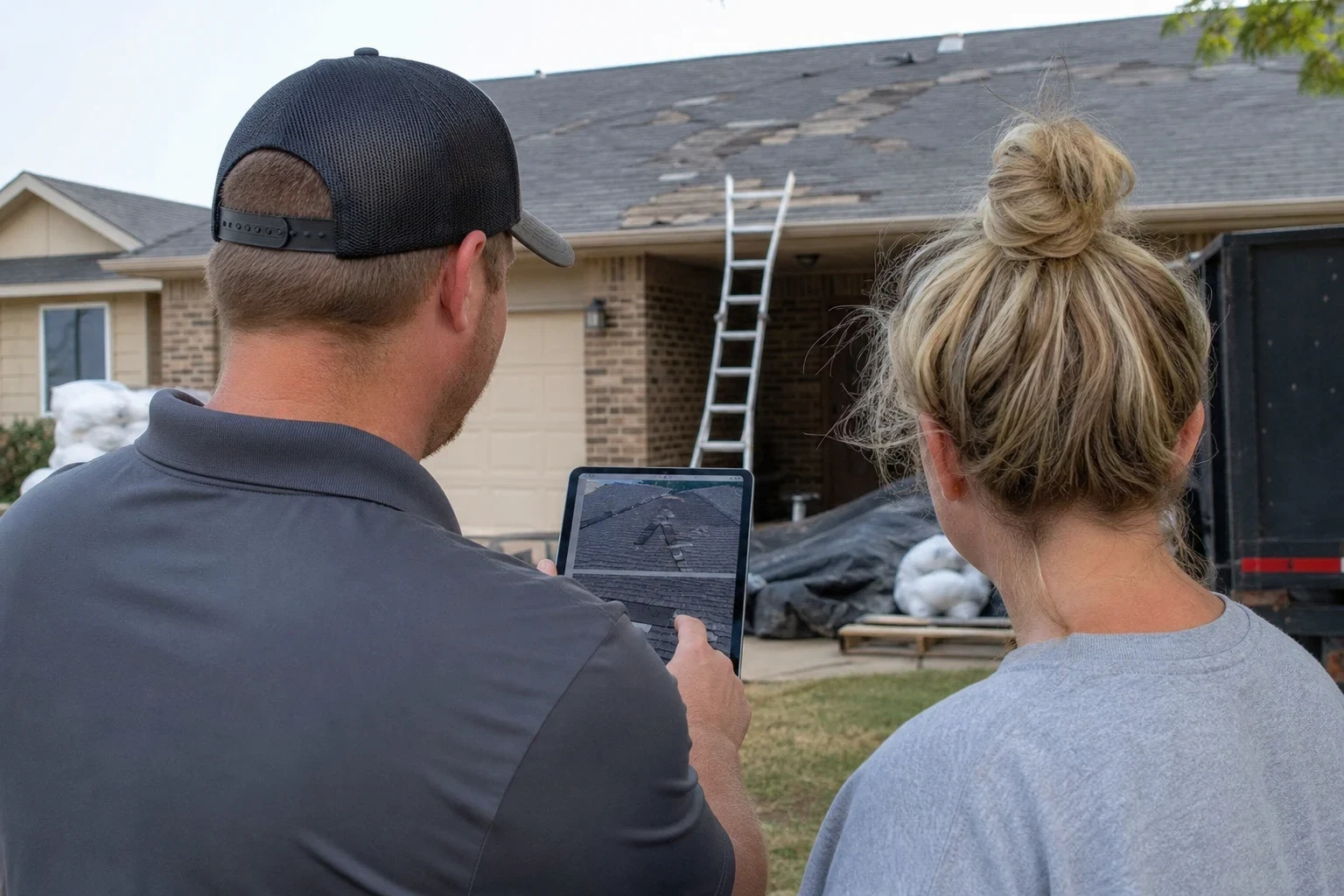
Gutter options and what comes with the job
- 01
One-piece aluminum
Most homes end up with this, and for good reason. We form it on site from a coil, so the only joints are at the corners and downspouts. It won't rust, and it comes in plenty of colors. Hail can dent it, which is the main trade-off.
- 02
Galvanized steel
Steel is heavier and shrugs off hail and leaning ladders better. It costs more, and once the coating wears through it can rust. We suggest it when dents worry you more than rust.
- 03
Copper
Copper lasts a very long time and weathers to brown, then green. It costs far more than aluminum. It suits older or higher-end houses where the look matters as much as the drainage.
- 04
Five-inch or six-inch size
Five-inch K-style handles most single-story roofs. Steep roofs, big roof planes or valleys that empty into one corner often need six-inch gutters with larger 3x4 downspouts. Oklahoma spring storms can drop a lot of rain fast, so we size for the hard storms, not the light ones.
- 05
Hangers, pitch and downspout placement
Hidden hangers go in close together, so a gutter packed with soggy leaves or a little ice won't bow. Each run slopes steadily toward its downspout. At the bottom, extensions or splash blocks carry the water out away from your foundation.
- 06
Gutter guards if you want them
Mesh guards keep out leaves and small debris. They cut down on cleaning but don't end it. We'll tell you plainly whether your trees make them worth it.
Questions about Gutters?
Call(405) 451-5185Signs your gutters need replacing
Water spilling over the edge
If water sheets over the front during rain, the gutter is clogged, too small or pitched wrong. Any of those means water is landing at your foundation.
Sagging or pulling away
Gutters that droop between hangers hold standing water. The extra weight pulls fasteners out of the fascia, and it gets worse with each storm.
Leaking joints and corners
Drips at joints or rust streaks on the gutter face mean the seals have failed. On older sectional gutters, this shows up at nearly every joint.
Soft or stained fascia
Paint peeling behind the gutter or wood that gives under your thumb means water has been getting behind the system. We check that board before we hang anything new.
Washed-out soil or mulch
Small trenches in your flower beds under the roof edge show you exactly where water is going over.
How a gutter job runs
- 1
First visit at your home
We go along the eaves, press on the fascia boards and put a tape on every run. We also note the roof pitch and where each valley drains, so we can size the gutters and decide where downspouts belong.
- 2
You choose the metal and size
We set out the choices for your house side by side: aluminum, steel or copper, five-inch or six-inch, guards or no guards. You get a written estimate with each item listed.
- 3
Old gutters come down
We take the old system off and haul it away. If any fascia is rotten, we show it to you and replace it before anything new goes up.
- 4
New gutters go up
Each run is formed in our truck to the exact length. We hang it, set the pitch, seal the corners and attach the downspouts. Then we run a hose through to check the flow and pick up the yard before we leave.
What moves the price of new gutters
Most of a gutter price comes from three things: how many feet you need, which metal you choose and how hard your roof edge is to reach. We list each part on its own line, so you can see what changes if you switch metals or add guards. We don't give a number until we've measured your home.
- Length of the runs and number of corners
- Each added foot of gutter is more metal to form and hang. Every corner, inside or outside, adds labor and needs its own careful sealing.
- Metal and size
- Aluminum costs the least, steel costs more and copper costs a good deal more. Going from five-inch to six-inch adds a little per foot but often pays off on steep or large roofs.
- Fascia condition
- If the board behind the gutter is rotten, it has to be replaced first. We show you photos so you know why it's on the estimate.
- Height and access
- A second story, a steep pitch or a narrow gap between houses means taller ladders, more setup and more hours on the job.
- Guards and extras
- Gutter guards, extra downspouts and underground drain connections each add to the total.
Gutter questions we hear
Are one-piece gutters really better than sectional ones?
For most houses, yes. Sectional gutters come in short lengths joined together, often around every ten feet, and each of those joints will leak sooner or later. One-piece runs only join at corners and downspouts, which leaves far fewer weak spots.
Will hail dent aluminum gutters?
Large hail can dent aluminum, and we see it after spring storms. Small dents usually don't change how the gutter drains. If hail is your main worry, steel holds up better. If a storm already did the damage, our storm damage repair page explains how we look at roof and gutter damage together.
Do I need six-inch gutters?
Not always. We look at how big and steep each roof section is and where valleys dump water. If a five-inch gutter would overflow at one corner in a hard rain, we'll tell you, and sometimes only that one run needs the bigger size.
My roof is getting old. Which should come first, the roof or the gutters?
When the shingles are nearly worn out, we'd do the roof first or both at once. A tear-off can bend gutters that are already hung, and the new drip edge has to lap over the back of the gutter to work right. If your roof still has good years in it, go ahead with new gutters now.
How often will I need to clean them?
Most homes need cleaning at least twice a year, once in spring and again after the leaves drop. Homes under big trees may need more. Guards stretch the time between cleanings but don't replace them.

Let's sort out your gutters
Tell us what you see during a hard rain. We'll set a time to measure, go over your options and give you your quote by phone.